
The Write Stuff
A Different Way to Think About Robots, Pencils,
Keyboards, Dance Shoes, Paintbrushes, and Writing
September 15, 2026
TLDR: Artificial intelligence’s humanistic shortcomings might not be intrinsic qualities of neural networks or silicon transistors but rather the result of the strategies we have used thus far to design LLMs. This goes way beyond grammar, nor is it about abandoning LLMs as a dead end. For neural networks to create on par with humans, we have to think creatively about how our brains are trained in things like taste and aesthetics, and then collect data, run experiments, and design model weights that approximate those routes and inputs, rather than starting at the finish line with the artistic output of human creators. Such problems and questions can only be explored through deep collaboration between humanists and technologists.
Unfortunately, ChatGPT’s writing deficiencies have become some of its most derided qualities, an incriminating marker of what critics disdainfully call “AI slop,” and the bane of professors everywhere. But fixing grammar or getting rid of em dashes are cosmetic changes that might improve writing but do not address much deeper, more complex, and more interesting questions about how human brains work in humanistic dimensions shared by all people, not just humanities majors. On my first day at Stanford University, Jewish Studies professor Arnold Eisen told us that the point of college was to learn how to think. I would argue that is also the main objective of AI companies— to teach machines how to think.
I studied writing in my History Ph.D. program at UCLA with Wendy Belcher, now a Princeton literature professor, who has become one of the staunchest critics of GPT writing. In fact, without Wendy’s instruction, I might never have gotten a job or published many historical books and articles. But it seems to me that the failings in both logic and grammar that she has critiqued are important and not insubstantial, but not inherently impossible to eliminate given today’s awesome GPT capabilities. Moreover, we shouldn’t frame LLM writing from the point of view of the bleary-eyed professor reading robotic papers, gnashing teeth, and beseeching the heavens in frustration, as much as I understand that point of view. Wendy and other critics think of LLMs as plagiarism engines, and don’t appreciate that they now function as thinking engines. And thinking engines can be trained, the way our own brains can be, if only we explore useful questions and adopt useful strategies, with both creativity and technical rigor.
I am very interested in the intellectual challenge of making LLM writing and visual generation better than they currently are, whether through improving user interfaces and product design to tune preferences and better results, or by deeper structural and systemic changes to how GPTs use their neural networks to manipulate and produce language. Doing so would pay dividends not just in better outputs, but in better training of models in the fundamental way their nodes and weights function in all domains, not just in writing. Those who say that LLMs can never achieve human-level thinking might not be thinking deeply or creatively enough about how humans think.
For example, visual images generated both from memories of lived experiences, films, and especially the mental images that form while reading books and primary sources in every domain are extremely important in how I assemble words and convey meaning. Musicality and even bodily rhythm and dance are also vitally important, not just as inchoate algorithmic models for pattern in language, which they are, but also, and perhaps more importantly, as sonic memory palaces that carry giant collectives of ideas, memories, taste, associations, interlinear implications, political views, aesthetics, philosophy, generational outlooks, and worldviews— not just my own but those of the creators and their times. You can learn a lot about a certain kind of experience, aesthetic, and sensibility by listening to James Brown, for instance, and a different one from Ray Charles, although they were both African American men, both from the Southeast, and both born within three years of the other into church-going families of manual laborers. I think of songs like beehive frames pulled from memory boxes, dripping with golden, viscous honey and covered in networked, life-filled hexagonal cavities, teeming with mobile masses of busy, buzzing bees. If that is true of artistic artifacts, LLMs could be trained to make similar associations with artistic outputs and, as a result, develop more human-like neural networks, perhaps leading not just to AGI but even to consciousness.
All of this and more goes into what we call “taste.” Critics often say LLMs lack taste, which is true in some respects and false in others. But taste can be taught—in fact, that is one of the major functions of education, not just to train us in taste, but to allow us to distinguish ourselves from others through taste. My favorite sociologist and social theorist, Pierre Bourdieu (1930–2002), argued that success in omnipresent competition for status within rule-bound social “games” allows us to win cultural capital that can be converted into prestige or symbolic capital, and then exchanged for friendships, mates, jobs, and wealth on various virtual markets. Bourdieu was born into the rural working class in the small town of Denguin and ascended to become Director of the École pratique des hautes études and a professor at the Collège de France in Paris. He outlined his theoretical system rigorously and in beautiful detail in many publications, including an entertaining 613-page tome, Distinction: A Social Critique of the Judgment of Taste (1979 Paris, 1984 Harvard UP).
Bourdieu is only one of many philosophers, sociologist, historians, and theorists who have examined taste. Another essential book is The Civilizing Process or Über den Prozeß der Zivilisation, 2 vols. (Basel, Switzerland, 1939), by Norbert Elias (1897-1990), a German Jew who fled in 1933 and whose book demonstrated the diffusion of “manners” (same root as “manual”), literally what you do with your hands at the king’s dinner table. Elias showed that manners diffused “downward” from royal courts to less prestigious classes, which gradually came to decry once common practices like eye gouging your opponent in a fight, not just using utensils. The analogy holds, if less strongly today. You can’t understand taste, how brains work, or the cultures of Silicon Valley without thinkers like these.
But education is not the only arena in which we acquire taste; it also comes from aesthetic judgments in comedy, music, television, film, fashion, photography, social media, and, in a very important and counterintuitive fashion, complex political commitments and generational experiences, not just voting preferences. We need to think about aesthetics in a much broader fashion: there are aesthetics in coding just like there are in mathematics or painting. Since personal experience is so foundational to the development of taste, the different life experiences and broader group identities of men and women play fundamental roles, as do subcultures, the term sociologist Dick Riesman first applied to society in books such as his best-selling The Lonely Crowd: A Study of the Changing American Character (1954). Riesman himself was born in Philadelphia to German Jewish parents. Being simultaneously an insider and an outsider, as Elias, Bourdieu, and Reisman were, conveys a kind of leverage that opens possibilities for understanding that insiders may miss. One could make the same argument about the utility of humanities Ph.D.’s in AI frontier labs.
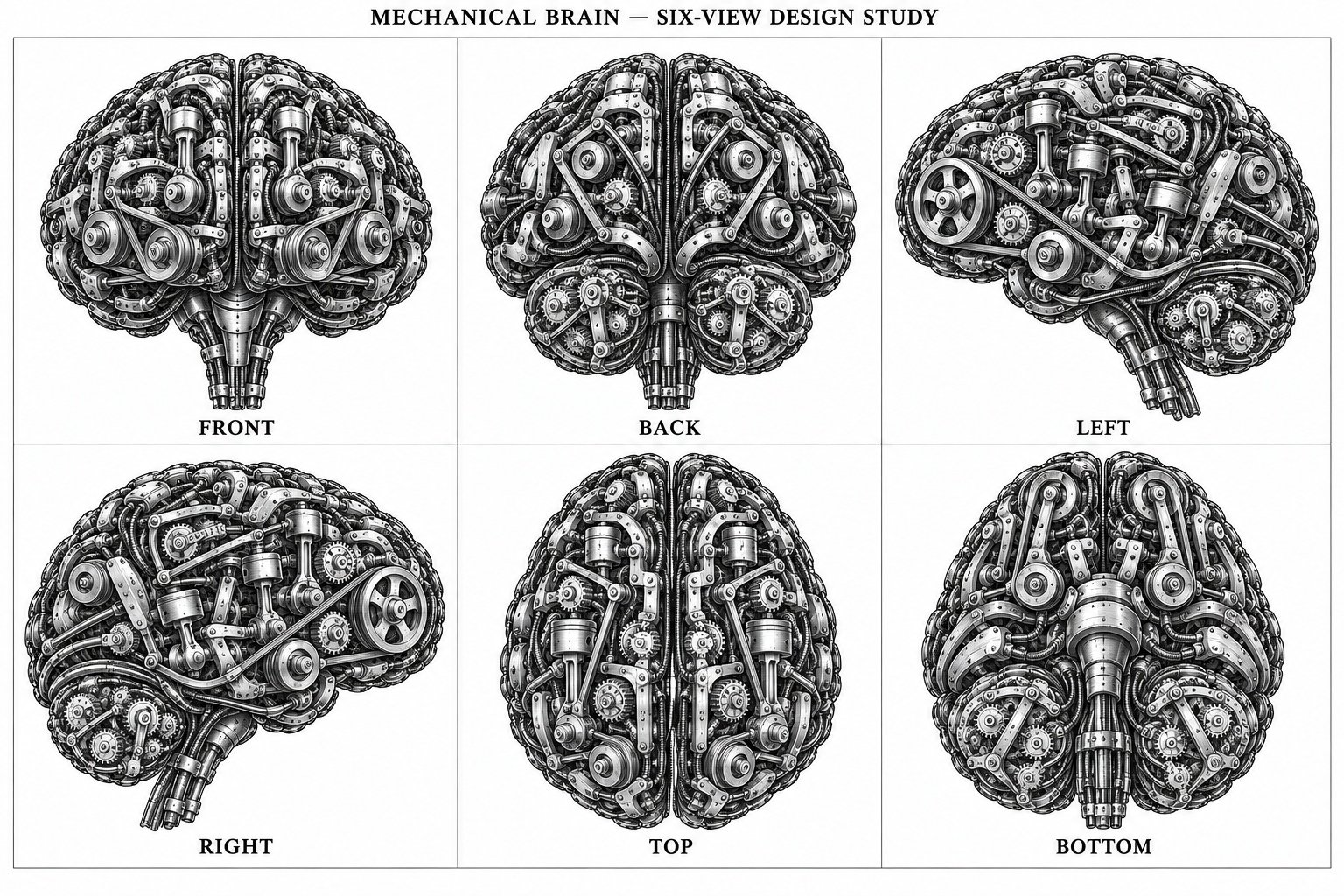
In terms of subcultures, regional distinctions are profound, as are occupational and sexual ones. Subcultures incorporate but go way beyond the sloppy categories we call race, ethnicity, gender, sexuality, class, or generation. We need to think much more deeply about how identity is formed, and how it forms consciousness in general and thinking in particular, if we want to use our awesome machines better than the Wizard of Oz used his mechanical puppet mask. It’s not enough to be cowed or impressed by art’s surfaces or by experts’ self-regard; we have to go behind the masks and study and reconstruct the levers, the ligaments, and the gears that makes them tick.
The point is, the assumption that AI will never be able to equal or surpass human judgment, taste, or art simply because it cannot presently do so is a false premise. All of these factors of subjectivity I have discusse could be modeled, as could the processes we use to compose writing, music or art. If you want to understand a great Boomer writer, you should study what they read as a child and a teenager, what music they listened to, the comics they read, where they lived, and what film and television they consumed. Doing so is intricate and painstaking, but also fun and not really as complex as it might seem— if you were born in 1950, you didn’t read Toni Morrison until the eighties, but you grew up with Robert Frost and Norman Rockwell. You almost certainly read certain comic books and listened to the same music as everyone else on the AM dial, before finding your own generational voices in the Beatles, Bob Dylan, Crosby, Stills & Nash, Dolly Parker, or Waylon Jennings.
You probably got exposed not just to timeless classics like The Great Gatsby but to a whole suite of middlebrow writers, comedians, comic books, musicians, and movies that have largely been forgotten. Your parents quite likely owned the complete Harvard Classics, a mail-order subscription series of great works that the WWII generation bought by the millions in an effort to “better” themselves. Reconstructing what was on your collegiate syllabi isn’t that difficult, because it was almost certainly the canon of “great White men.” The Smothers Brothers and The Kingston Trio might have mattered to you a lot more than Dylan, depending on a whole host of factors like the year you were born, where you went to university, or what you majored in. All of these factors require historical research, which is what I am best at. They are not insolvable problems. Dissertations have bibliographies, as do the works of dissertation advisors. With enough person power, it would be possible to form complex intellectual, artistic, and cultural matrixes that then could be mapped onto scholarly and artistic output to essentially
The point is, the corpus of inputs and ingrained hierarchies that form taste could be reassembled as training data for specific viewpoints and sensibilities, and appropriate weights created that could then be applied to many LLM endeavors, not just to writing or the arts— if we figure out how minds work to write, we can apply similar principles to scientists and mathematicians. I grew up in Berkeley, the son of a Cal biochemistry PhD, and every great scientist in my father’s peer group is also a humanist intimately familiar with music, art, film, comedy, and literature. The kind of networks I am describing are used in quantitative and scientific endeavors, not just the humanities. My father is fond of relating that some mathematicians can tell the nationality of other mathematicians by their signature style of solving problems alone, the way a jazz buff can identify a saxophonist from only a minute of a song.
There could be a real place for a company with the resources of a frontier lab to conduct bespoke fMRI studies as master creators create, but the questions scientists and developers investigate would be more fruitful if they grew out of deep interactions with humanists such as myself. What I am proposing goes way beyond using English and History grad students like digital lab rats grading LLM piecework for small pellets of cash rewards, and toward rethinking what thinking is.
Artificial intelligence’s humanistic shortcomings might come not from an intrinsic quality of neural networks or silicon transistors but from the strategies and weights we have used thus far to connect them. There simply may not be enough humanists working in frontier labs in collaboration with other specialists as equal partners. The liberal arts and artists may or may not rule the digital world—it sure doesn’t look that way. But the future would be brighter if we did not simply ask how to make better LLM writing, but if we worked together to design the inputs, structures, weights, and processes of the neural nets themselves, to learn how the human mind learns to think, create, and have particular taste, rather than starting at the finish line with the artistic product itself.
For more reflections on AI and writing, see my blog.