
BAGEL BOT:
A stress test of Astra gaming
It all started with a blog post about what separates human from AI writing, that used the example that I have trillions of data points about New York as someone who has lived there, researched it, and written books about it. So I made an illustration with GPT-5.6 Sol.
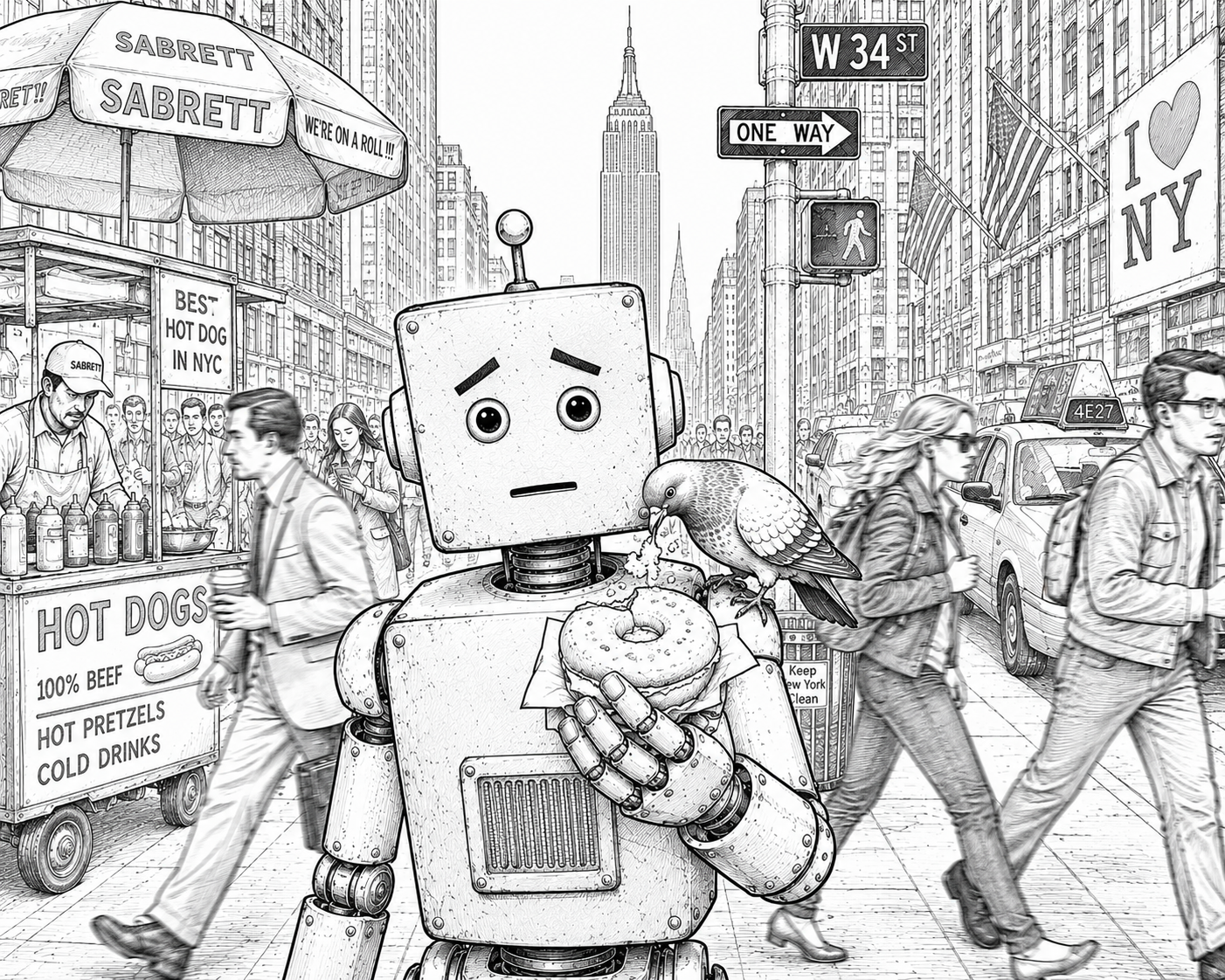
So then I told Astra by voice to make a video game: “Okay, I’d like to turn this image into a three-dimensional video game where I can control the robot walking in the other direction down the street as people stream towards him, and you have to dodge the people using the arrow keys And you can also make him run using the space bar. And there should be a score for every person that you pass successfully, and you have nine lives, and you lose a life if you run into somebody, you fall down on the ground.”
Bagel Bot was born. It was actually FUN and I was ASTOUNDED. I started telling all my friends and family about it. They seemed skeptical.
Then I decided to push the limits and spent several days giving it instructions, each one more taxing than the next, and watched it comply with each one—not flawlessly, but impressively. I introduced a stupid degree of complexity. Leaderboards? Check. Commerce store selling virtual costumes and real bagels? Check. Translation into any of 33 languages? Instant. Expand the gameboard to four square miles of Midtown Manhattan based on textured, accurate depictions of actual streets and buildings? No problem. Streets full of cars, trucks, and bike messengers you have to dodge? Extra points for looking up at skyscrapers? King Kong swatting biplanes on the Empire State? Complicated missions involving delivery to actual addresses? A working subway system with choosable destinations based on the authentic subway system? Check, check, check, and check.
I even showed it an old video of 80s breakdancing and it created a hidden robot breakdance scene in Times Square. Yes, the robot attempted The Robot (though it didn’t understand that the arm is supposed to waggle down, not up, from the elbow, even after I told it). Rome wasn’t built in a day.
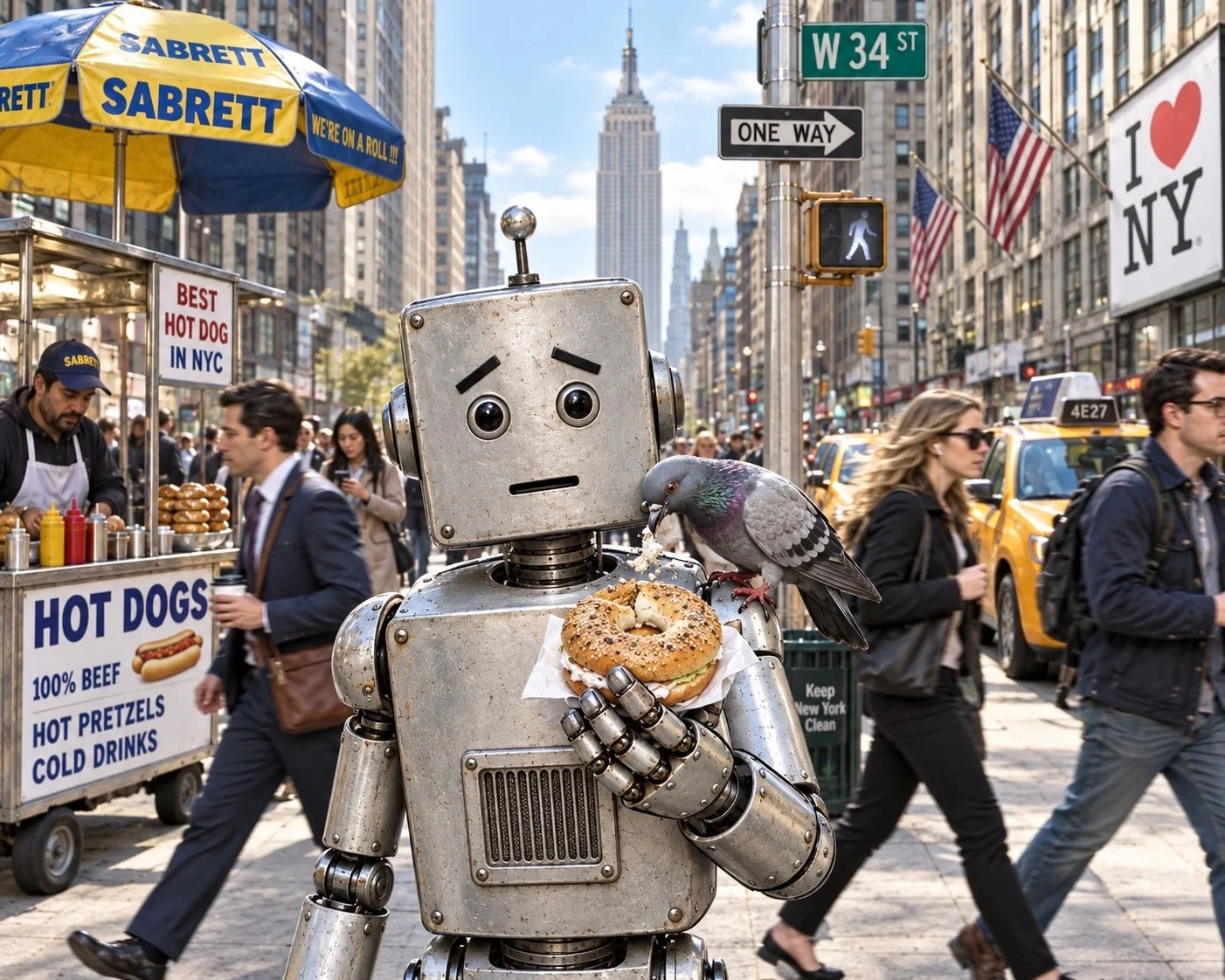
Then GPT-6 Astra appeared on September 4, so I turned the drawing into a photorealistic image. I was STUNNED.
More is not More.
But not surprisingly, with feature bloat, the game started to break. Pedestrians massed on street corners, or walked endlessly into lamp posts. Cars and bikes became glued together like centipedes. The game was more impressive but less fun to play. It might have been helpful if Astra had said: “We seem to be experiencing a lot of bugs. Do you want to keep fixing them, or do you want to go back to the point when the game started malfunctioning and became less entertaining? Or, if you like, we could create a testing space where we could carefully design each visual element and each behavior before we release them into our larger game space.”