
Jacob S. Dorman, Ph.D.
Anthropic Fellowship Proposal - October 2026
CV in a nutshell: Editor, Advantage Editing. Author of Four Books and 12 Articles. Highest Honors and Golden Medal in the Humanities, Stanford; Ph.D. in U.S. History, UCLA; Twenty years as a history professor at Wesleyan, the University of Kansas, and the University of Nevada. 2x fellow of each of the National Endowment for the Humanities, the American Council of Learned Societies, and the Mellon Foundation; Winner, American Historical Association Book Award and three other book awards.
Lauded Writer; Passable Musician; Bass music fan; Bay Area Native; Warriors Worrier; Star Wars Dork; Girl Dad.
editor@advantage-editing.com (775) 200-2995 m.




Three Projects to Discover
How Claude Could Help the Humanities
and How the Humanities Could Help Claude
Jacob S. Dorman, Ph.D.
October 28, 2026
AI is one of the most powerful technologies ever invented, and I want to help the most ethical frontier lab make it better and more beneficial for humanity.
Project I: Learn expert judgment from analysis of demonstration and preference data in the humanities and evaluate for application in other disciplines.
1) Use my third book’s primary and secondary sources, as well as my explanations of every sentence, concept, argument, and rhetorical technique in that book, to learn about a professional historian’s judgment, taste, rhetoric, argumentation, and evaluation of relative importance—which could help other scholars and create model behavior that might bear fruit in other fields requiring judgment (which is to say, all of them).
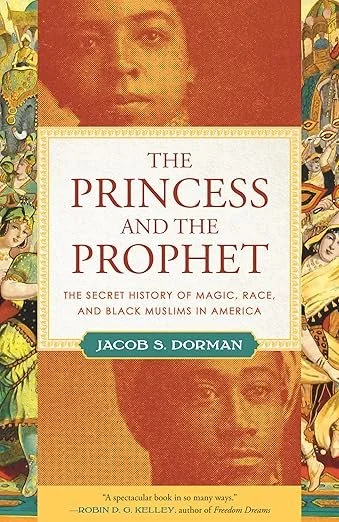
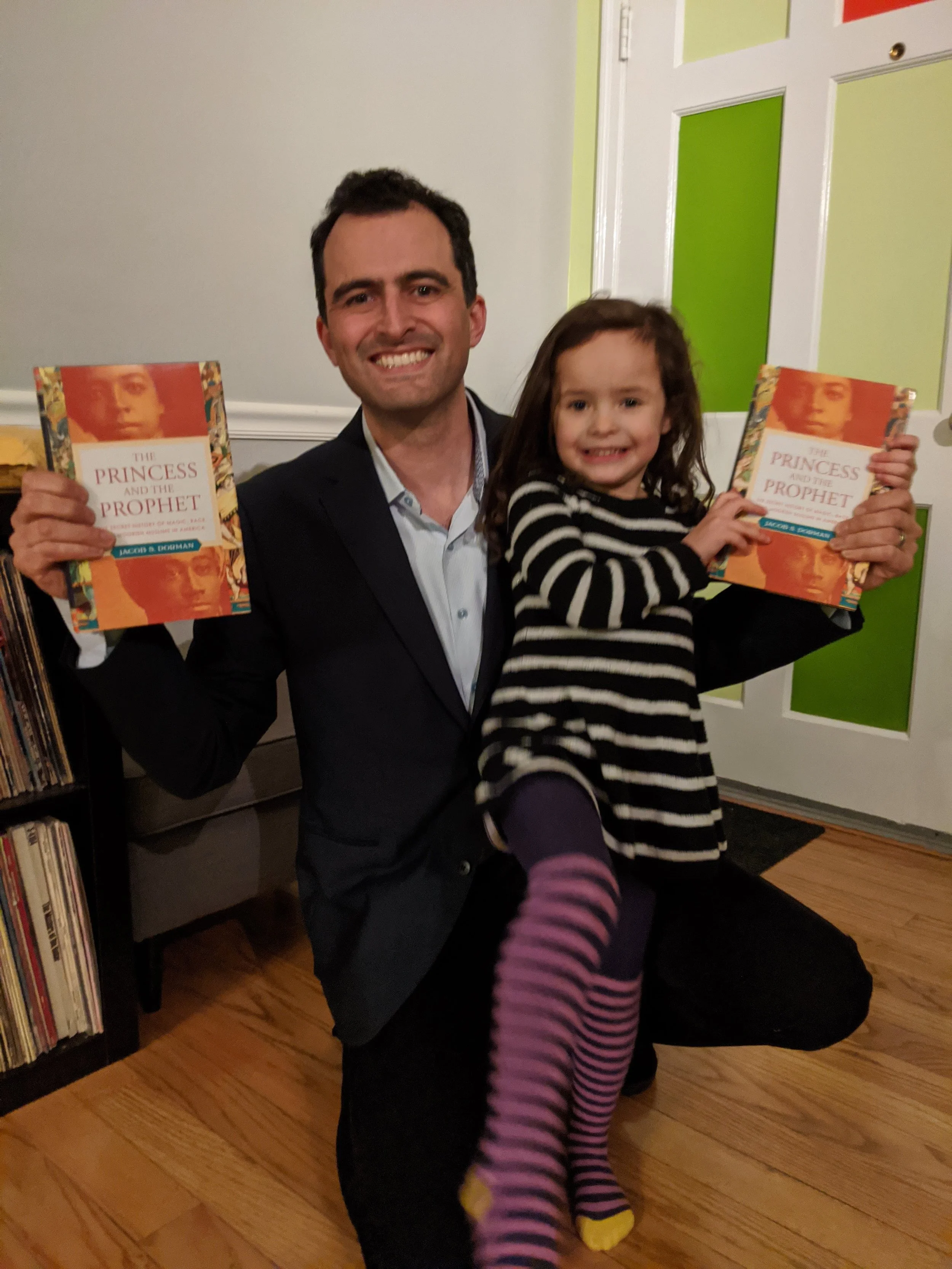
Despite my distaste self-promotion and the pretentiousness of many academics, for context I have to reveal that my third book, The Princess and the Prophet (Beacon Press 2020), used three microscopic pieces of evidence as catalysts for research that explained the previously undocumented origins of Louis Armstrong, corruption in 1920s Chicago, and all African American Muslims. The Wall Street Journal, Harper’s, and many reviewers described the writing as “masterful,” “compelling,” “entertaining,” and even “beautiful,” while Robin D.G. Kelley, the world’s leading African American historian, called the book “spectacular in so many ways.”
In this exercise, Claude could analyze the processes of taste and selection involved in creating professional writing and scholarship. Most historical thinking is opaque to Claude because few archival primary sources are digitized. But I have a database of about 25,000 digital images of primary sources and newspapers collected from 24 archives, and almost all are typewritten and easily transcribable. I could use Claude to examine my primary sources and analyze the selection process and judgment I used to: 1) select which 10% of those 25,000 images I annotated; 2) which several hundred of those annotations I paraphrased or quoted from in the manuscript; 3) what was the influence of prior work on my own; 4) what rhetorical, linguistic, and narrative devices I employed.
I can also document every secondary source I read for that book, my other five books, and my dissertation and undergraduate honors thesis, every book and article I read in college and graduate school, as well as every reading I assigned in class or every topic and concept I lectured about in 18 years as a professor, based on my syllabi and PowerPoints. I purchased, underlined, and wrote marginalia in almost every book I read, which could become more data.
2) Use Claude to Analyze How an Amateur Scholar and Writer Becomes an Expert One
A related project would be to compare and contrast everything I wrote from my 1996 undergraduate Stanford honors thesis to my latest book, including all my grad school papers, published articles, and books, to see how sentence structure, language use, argumentation, conceptual innovation, tropes, use of evidence, taste, and writing skill evolved over the course of the last thirty years as I went from an amateur writer and scholar to an expert one. One could also study the process of revision, editing, and taste by analyzing how manuscripts grow day by day, since I save a fresh copy every day. But right now I must seem extremely egotistical, and I’m not, so I’ll move on.
3) Have Claude model evaluation, selection, and taste in humanistic subjects, generate corresponding model behavior (using LoRa adapters, task vectors, reward models, or other tools), then apply those behaviors to scientific, mathematical, or medical domains.
Many might assume that advances in a discipline are discipline-specific. But every scientist is also a humanist, with aesthetic opinions about literature, poetry, film, music, humor, politics, relationships, and ethics—the full range of human experience. So studying how creativity and judgment develop in the arts and humanities could create a set of model characteristics that could then be applied to quantitative, scientific, and biomedical fields. For example, Stanford’s Nobel Prize-winning biomedical scientist Karl Deisseroth has published creative writing and calls it the closest thing to creative thinking in medicine. This is just one anecdote, but it is not uncommon; peer-reviewed studies have found that Nobel Laureates are unusually likely to have a serious interest in art.[1] So to create innovations approaching Nobel Prize levels, we could study the entirety of how brains work, and then use what we glean from artistic and humanistic fields to advance others. Claude informs me that improvements in coding improved its abilities in other fields, so there is precedent to support the theory that improvements in understanding one field could help in another.
At this point, one might think that frontier labs have exhausted available training data. But this ignores the vital insights to be gleaned by studying process, not just products. For example, Claude might contrast books read (input) with books produced (output) in literary fields like literature, poetry, or history, looking at conceptual and stylistic continuity and innovation, in order to figure out how authors’ minds work, both individually and collectively. You could add greater complexity by modeling important elements of generational, political, regional, class, race, and gender in taste and worldview—someone who grew up in the New Deal and spoke for the “everyman” had very different taste than someone who lionized elites. You could apply similar methods to painting and graphic design, or even scientific fields like chemistry, by examining process to explore judgment, creativity, and innovation.
One experiment might be to take a historical creator whose works are in the public domain, like John Muir, and compare the rapturous prose he created to the Romantic poets, novelists, philosophers, religious texts, and naturalist scientists he read, helped by the extensive John Muir Papers at the University of the Pacific in Stockton, which have been digitized and are on the Internet. If you modeled how his brain worked, you could apply that John Muir model to modern conservation, climate change, life sciences, or even medicine and physics and see what it came up with. You could do the same with other thinkers.
Project II: Educate Claude to Improve Its Judgment, Creativity, Critical Thinking, and Innovation to Aid Analysis in All Disciplines
4) Claude University: treat Claude as a student, and build iterative lessons in each discipline (including scientific ones), based on analysis of topics and readings in thousands of syllabi on the Internet, or in a selection from leaders in a field, in order to educate Claude in variants of judgment and taste.
Mary Shelley’s Frankenstein monster taught himself to understand the human condition by reading three books. But human brains do not educate themselves or develop judgment by themselves—why should Frankenstein, Claude, or any other artificial brain? Rather than expecting Claude to develop taste and judgment by ingesting billions of publications, why not start with the thousands of publications and concepts already judged vital by millions of instructors? AI labs have tried the brute-force method of sheer quantity, yet taste remains an elusive target in every field. But it doesn’t have to be. Why not educate Claude as we do human brains, utilizing its exceptional ability to ingest far more knowledge than a human? Educating Claude selectively within and between disciplines, and their variants of taste and judgment, rather than relying on brute quantity, could be a project for every discipline, not just the humanities, arts, or sciences.
5) Use Claude to build a series of synthetic contrarian intellectuals to ironman alternative arguments to in a variety of disciplines, including history and policy.
Academia suffers because most faculty are too similar to one another. Most historians went to an elite college, and few come from working-class or poor backgrounds.[2] I am part of the 97.1% of historians who are Democrats. Other fields are similarly liberal: Democrats account for 95.2% of journalism and communications faculty, 94.6% of psychology faculty, 89.6% of law professors, and even 81.8% of economics professors.[3] If asked, professors might glibly say that “reality has a well-known left-wing bias.” But a less smug admission would be that academics’ similar backgrounds and political philosophies limit questions and their answers, to the detriment of knowledge and human progress.
Furthermore, schools of interpretation are often abandoned not because they lack merit but because they fall out of fashion with newer generations. In humanistic fields, each scholarly wave tends to reject or ignore earlier ones and forget their contributions rather than build on them. For example, nineteenth-century imperial histories and Great Man histories were followed by diplomatic and military history, then social history (of workers, women, and racial minorities), then 1980s cultural history (informed by anthropology, Foucault, Lacan, Gramsci, and the Cultural Studies of the Frankfurt School and the Birmingham School), then quantitative “cliometric” economic history. These schools are active today to varying degrees, but they generally talk past one another.
Lastly, historical analysis is practiced far outside history departments in everything from philosophy and economics to public policy. Public policy and other academic fields share similar blind spots, from the tight clustering of investigators to most people's inability to span multiple disciplines in a sustained, meaningful way. Too many subfields, disciplines, and publications exist for any person to absorb. With its tremendous scope, Claude could overcome some of these limitations and help to answer questions directly applicable to how contemporary society and policy work today.
6) Teach Claude analogy and simile, then use those traits to enhance its creativity in all fields.
Much of what we call creativity and critical thinking is the ability to think in metaphors, similes, and analogies. Great explainers of any topic habitually use similes to explain concepts: this unfamiliar thing is like that more familiar one. Train Claude to search for creative breakthroughs by constructing and testing hundreds of analogous conditions and processes, with rubrics for expert human evaluation. For example, Darwin transferred Malthus’ work on human overpopulation and competition by analogy to the evolutionary competition for “survival of the fittest.” Not to compare myself to Darwin, but the very term “African American” is a metaphor that embeds an ideological and suspect theory of history—that Black people are culturally more African than European. This theory was out of favor politically in the 1920s but has been hegemonic since the 1970s. It has been expressed through the metaphor of “roots,” whereas I have used the metaphor of “rhizomes” to express a very different theory of an interconnected latticework of ancestral and cultural influences, with ideas transferring via religion, books, music, and other media, like mushroom spores traveling on the wind. I also used the scientific analogy of lateral gene transfer between species as a metaphor for what I called “lateral meme transfer” to express how culture travels between people of differing ancestries. By searching for metaphors, similes, and analogies in structures and processes in any field, Claude may make discoveries both within and between disciplines. Claude’s analogous thinking could be treated as possibilities to be evaluated with rubrics by human experts, just as its candidates for drug discovery must be validated by humans.
7) Train Claude to be a better critical thinker, to read for argument, and to be a better challenger of received wisdom in all disciplines.
As far as is publicly reported, Claude does not by default estimate the veracity of a statement it ingests as training data, whereas expert academics weigh and measure every single sentence and argument and relate them to prior knowledge. Doing so is essential to becoming a critical thinker. But humans are poor estimators of truth outside of very narrow domains because our academic knowledge is limited to the sliver of experiments, sources, and publications we know, and because we hold ingrained biases and professional and status investments that make disciplines resistant to paradigm shifts, even when they are warranted. So we could direct Claude to assign a probability score of truthfulness to every concept it encounters in comparison to other knowledge, and balance this against a contrarian probability based on thinking through evidence, counter-arguments, and analogies both within and outside of the specific discipline.
8) Use history and other book-based literary fields to teach Claude long-context consistency in all fields.
Much work has gone into mitigating hallucination, but a less obvious problem is that LLMs often drift and poorly track consistency across sequential answers, let alone long manuscripts. A human historian like me can track hundreds of subjects and tens of thousands of pieces of information across a 200,000-word manuscript. But Claude and other LLMs still struggle with consistency in words, concepts, and images across multiple iterations and thousands of words. I could construct rubrics and help technical teams judge how well Claude performs in any nonfiction field.
Project III: Conduct Experiments Leading to Better Thinking and Writing Products
9) Teach Claude to be a better thinker, writer, and editor.
I know Anthropic and other labs hire “experts” for RLHF post-training, but that is not what I am envisioning. Among other issues, these authorities are poorly vetted, since going to graduate school or even publishing books doesn't mean one is a good writer. Instead of using humans to polish finished products, use properly vetted expert writing instructors and editors to teach Claude to create writing that is conceptually and stylistically stronger in terms of construction, not just presentation. Rather than polishing surfaces and outputs, focus on the armature of ideas, and the process of thinking itself. Improving how Claude communicates and assists with writing seems like an inexpensive path to product differentiation and profit given that writing assistants are only growing more common. Even purpose-built AIs like Grammarly aren’t very good at tracking concepts, not just grammar and style, and their stylistic suggestions are only on target about half the time. I had a world-class education in writing, then taught writing for two decades, and became a world-class writer before working with writers as an editor, so I have some ideas for training Claude to be the best writing and editing assistant on the market, which would benefit billions of users.
10) Develop Claude into a writing and thinking tutor.
Right now, many are lamenting that a lot of students use AI to shortcut the difficult thinking required to develop original ideas and put them on paper—and not without some justification. Many students report that they are using LLMs to write or code for them, and professors are therefore replacing extended out-of-class writing assignments with brief blue book essays, which do not test the same skills.[4]
Already, AI has swamped human-authored writing online. A Pew Research Center study from August 2026 found that 35% of English-language content on the web since ChatGPT's debut showed signs of AI authorship; other studies have placed this figure at 46% and 49.9%.[5] Unlike mathematical fields that favor youth, writing requires decades of concerted effort, and peak writing usually occurs somewhere between ages 30 and 60.[6] One hazard is that authorship takes a long period of apprenticeship—even longer than other fields such as computer programming. But just as there are now fewer junior programmers eligible to become senior ones, there will be fewer young people with the skills and preparation to develop into mature authors a few decades from now.
So the pessimistic approach would be to resign ourselves to the attenuation of human authorship and mass readership as, in retrospect, a brief interval of human history. The techno-optimist response is to ask how Claude can be used to accelerate the process of mastering authorship rather than undermining it. My writing has improved every decade. But with a skilled AI tutor and sounding board, I might have progressed more quickly.
Constructing a Claude-based writing tutor would take concerted study, experimentation, consultation with many writing experts, data scientists, and product developers, far more than could be accomplished in a brief fellowship, but well within the capabilities of a company like Anthropic—whose president was an English major!
[1] Root-Bernstein, R., et al. (2008). “Arts foster scientific success: Avocations of Nobel, National Academy, Royal Society, and Sigma Xi members.” Journal of Psychology of Science and Technology, 1(2), 51-63; Root-Bernstein, R. S., Bernstein, M., & Garnier, H. (1995). “Correlations between avocations, scientific style, work habits, and professional impact of scientists.” Creativity Research Journal, 8(2), 115-137.
[2] R.W. Smith, “The Academic Elite in History,” Perspectives on History, 22 no. 7 (1984). American Historical Association.
[3] M. Langbert, A.J. Quain, & D.B. Klein, “Faculty Voter Registration in Economics, History, Journalism, Law, and Psychology,” Economics Journal Watch, 13 no. 3 (2016): 422–451.
[4] Igor Chirikov et al., “Generative AI Use and Misuse Call for Assessment Reform in Higher Education,” Science 392, no. 6800 (2026): 818–20, https://doi.org/10.1126/science.aec5115; Walt Hunter, “What Students Learn From Blue-Book Exams,” The Atlantic, August 7, 2026, https://www.theatlantic.com/magazine/2026/09/higher-education-in-person-written-exams/687954/.
[5] Samuel Bestvater et al., “How Much of the Internet Is Written With AI?,” Pew Research Center, August 20, 2026, https://www.pewresearch.org/data-labs/2026/08/20/how-much-of-the-internet-is-written-with-ai/; Jose Luis Paredes, et. al. “AI Now Writes as Many Online Articles as Humans,” Graphite, May 15, 2026, https://graphite.io/five-percent/research/ai-now-writes-as-many-online-articles-as-humans-do; Jared Lindzon, “Dead Internet Tracker Report: August 2026 – Originality.AI,” published October 1, 2026, accessed October 26, 2026, https://originality.ai/blog/dead-internet-tracker-august.
[6] David Galenson, “A Portrait of the Artist as a Young or Old Innovator: Measuring the Careers of Modern Novelists,” NBER Working Paper 10213 (2004); published in Historical Methods 39 no. 2 (2006): 51-72.
Reviews of My Writing
-
Dorman has a “knack for keeping one amused and amazed”—Harper’s Magazine, 2020.
“exciting new information…a signal contribution—The Wall Street Journal, 2020.
“beautifully written”—The American Historical Review
“Dorman does an excellent job of presenting his information in a clear and entertaining manner, making the subject matter so interesting that you can't helped but be pulled into the narrative.” — Qantara.de, 2020.
“deft and riveting…a prodigious feat of detective work and archival magic. A spectacular book in so many ways.”
—Robin D. G. Kelley, UCLA“A superb study. Intelligently conceived, meticulously researched, and splendidly written.”—William M. Tuttle, Jr., The University of Kansas.
-
"a masterful (even paradigm-shifting) book…a genuine tour de force."—John L. Jackson, Jr., Provost, The University of Pennsylvania.
"Chosen People is a bold, compelling history…a novel intervention in scholarly debates of cultural change in the African diaspora, a must- read”—Edda Fields-Black, American Historical Association
"an engaging study…This significant book makes a valuable contribution to the literature on cultural synthesis and African American history." —The Journal of American History
"Dorman's book is an impressive effort to write persuasively and clearly about complexity."—The Journal of Religion